
Grand Theft Auto Is Built Around Crime – So Why Do Some Players Keep Choosing to Be the Cop?

- Analysis: This feature combines reported facts and quotes with the writer's own interpretation.
- Grand Theft Auto has spent nearly 29 years as one of gaming's most controversial franchises, stealing cars, shooting up the street, causing as much chaos as the controller allows.
- The clearest example on record comes from Matthew Orona, an aspiring games journalist from El Paso, Texas, who wrote about watching his four-year-old son play GTA: San Andreas back in 2010, in an ess…
Analysis: This feature combines reported facts and quotes with the writer’s own interpretation.
Grand Theft Auto has spent nearly 29 years as one of gaming’s most controversial franchises, stealing cars, shooting up the street, causing as much chaos as the controller allows. So it’s a genuine surprise, documented more than once, that some players introduced to that same sandbox gravitate toward the opposite instinct: putting on the badge instead of running from it. GTA police roleplay, in particular, has quietly become its own small scene, one built by players choosing law and order in a game named after grand theft.
The clearest example on record comes from Matthew Orona, an aspiring games journalist from El Paso, Texas, who wrote about watching his four-year-old son play GTA: San Andreas back in 2010, in an essay published on Bitmob and later reprinted by Kotaku. He expected the worst. What he got was something else entirely.
He Expected Chaos. He Watched Something Else Happen.
Orona let his son take the controller mostly to see how he’d react without being steered toward “acceptable” behavior. The boy’s first move set the tone: told to steal a car waiting at a red light, he refused, insisting, accurately, that it already belonged to the person driving it.
From there, he drove carefully, stopped at intersections even without knowing the actual traffic rules, and was “incredibly ashamed” and apologized after accidentally hitting a pedestrian. Then a police car caught his attention. He asked to drive it. Orona turned on the lights and sirens and showed him how to trigger the game’s Vigilante missions, and, in his words, “it was as if his imagination had come to life.” His son spent the rest of the session chasing down criminals, then switched to an ambulance to ferry injured people to the hospital, then to a fire truck to put out a burning car.
None of that was scripted or suggested. Given a game literally named after grand theft, a four-year-old built his own version of it around law enforcement and rescue work.
Why GTA Police Roleplay Appeals to Some Players
Orona’s son isn’t an isolated case. A separate, more organized version of the same instinct exists among adult players: GTA roleplay, commonly called GTA RP, is a modded multiplayer environment built around GTA V, a separate scene from Rockstar’s official GTA Online service, not a layer running on top of it. It lets players build out a character with a real profession, journalist, paramedic, mechanic, criminal, or cop, inside servers with their own rules, where GTA’s usual chaos mostly isn’t welcome. Rules around combat, death, and respawning vary from server to server, but the shared premise is that actions are expected to make in-character sense rather than just being whatever the game physically allows.
PCGamesN spoke to several people who specifically chose the police role. One, who goes by Kylie, told the outlet she’d wanted to be a real officer since childhood but didn’t think it was possible, she’s small, and she has juvenile rheumatoid arthritis. Roleplaying as a cop, working through the in-server academy process and talking to other officers, changed her mind: “I discovered that I can do it,” she said.
A streamer who goes by ConfusedDevil came to it differently, sidelined from powerlifting by a back injury, he found GTA RP while looking for something to stream and ended up joining a server’s police department because he liked how seriously its organizer treated the roleplay. “I wanted to be a cop because I liked the vision of how he wanted the roleplay to work,” he said. “He wanted us to be actual characters.”
GTA Gives Players More Freedom Than Its Reputation Suggests
The instinct in both stories comes from the same place: GTA’s sandbox format hands players the freedom to cause chaos, but that’s a ceiling, not a requirement. The ESRB’s own rating notes that attacking civilians in the base game triggers a wanted level and a police response, the game is already built to treat lawbreaking as something with consequences, not just a feature to exploit.
GTA RP servers extend that same logic further, formalizing it into actual departments with ranks, procedures, and recruitment standards. Choosing the criminal path is still an option there, but it isn’t the only one, and for players like Kylie and Orona’s son, it wasn’t the interesting one.
What Kids Actually Get Out of Playing
It’s worth zooming out from GTA specifically, gaming’s audience skews a lot older and broader than most parents assume. A Pew Research Center survey of 1,423 U.S. teens, highlighted by the American Psychological Association, found 56% of teen gamers said gaming improved their problem-solving skills and 41% said it helped them work better with others. The same survey found real downsides too, 41% reported gaming had hurt their sleep, and 43% reported experiencing at least one form of harassment or bullying while gaming.
That mixed picture matters more than either side of the usual argument. Gaming isn’t uniformly good for kids, and it isn’t uniformly harmful either, the specific game and how a kid actually plays it tends to matter more than the genre or the box art.
The Old Argument About Violent Games
GTA’s reputation is inseparable from the decades-long fight over whether violent games make kids more aggressive. The American Psychological Association has reported small associations between violent-game exposure and some measures of aggression, while also stating there isn’t enough evidence to link violent video games to real-world violent or criminal behavior, those are two different claims, and it’s worth not collapsing them into one.
A 2019 preregistered study from Oxford’s Oxford Internet Institute, published in Royal Society Open Science, surveyed 1,004 British teens aged 14 and 15 along with an equal number of their parents or carers, 2,008 people in total, and found no association between how much violent content a teen played and how aggressively they behaved, based on parent-reported behavior rather than the teens’ own accounts. Preregistering a study’s hypotheses and analysis methods before collecting data, as this one did, removes the opportunity to adjust either after seeing the results.
None of that adds up to “violent games have no effect.” It adds up to a real distinction: small associations with certain aggression measures are one finding; evidence that violent games cause real-world violent or criminal behavior is a much higher bar that hasn’t been met.
That Doesn’t Mean the Rating Doesn’t Matter
Grand Theft Auto V carries an ESRB Mature 17+ rating for a real reason: blood and gore, intense violence, strong language, strong sexual content, nudity, and drug and alcohol use are all listed content descriptors, not exaggerations. A kid choosing to play police instead of causing chaos doesn’t erase any of that content from the game they’re playing.
What both stories above actually argue for isn’t loosening the rating or assuming every player defaults to the wholesome version. It’s that a game’s title and reputation predict less about what’s actually happening on screen than most parents assume, which means the more useful move is watching what a kid is doing with a game, and which server or mode they’re doing it in, rather than reacting to the title alone.
The Real Takeaway
Grand Theft Auto has never stopped being a game about crime. What both Orona’s son and players like Kylie demonstrate is that a sandbox built around lawbreaking doesn’t automatically produce players who want to break the law, some of them, given the choice, would rather write the ticket.
Sources: Matthew Orona, originally published on Bitmob.com, reprinted by Kotaku, 2010; Iain Harris, PCGamesN, updated Oct. 2, 2020; ESRB, Grand Theft Auto V rating; Pew Research Center, “Teens and Video Games Today,” May 2024, as reported by the American Psychological Association; University of Oxford / Oxford Internet Institute, Royal Society Open Science, 2019.
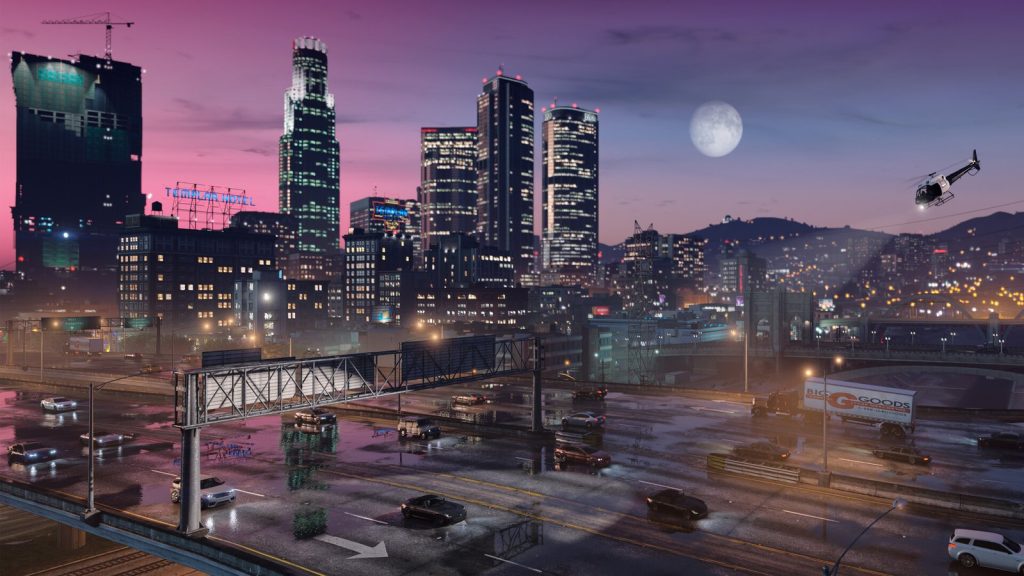
Featured image: A police chase in Grand Theft Auto V. Image: Rockstar Games
