
Louisiana: Bettor Claiming $25,728 in Losses Sees DraftKings, FanDuel Move His Class Action to Federal Court

- DraftKings and FanDuel have moved a proposed class action by three New Orleans bettors out of Louisiana state court.
- The two sportsbooks, FanDuel's parent company Flutter Entertainment, and two Louisiana casinos that the bettors say hold the licenses the apps operate under filed the notice of removal on Nov.
- GameEmpress read the full 18-page notice and the New York complaint the companies attached to it.
DraftKings and FanDuel have moved a proposed class action by three New Orleans bettors out of Louisiana state court. In their filing, the companies argue the case cannot stay there because similar class actions had already been filed in New York, Illinois, New Jersey, Pennsylvania and Michigan.
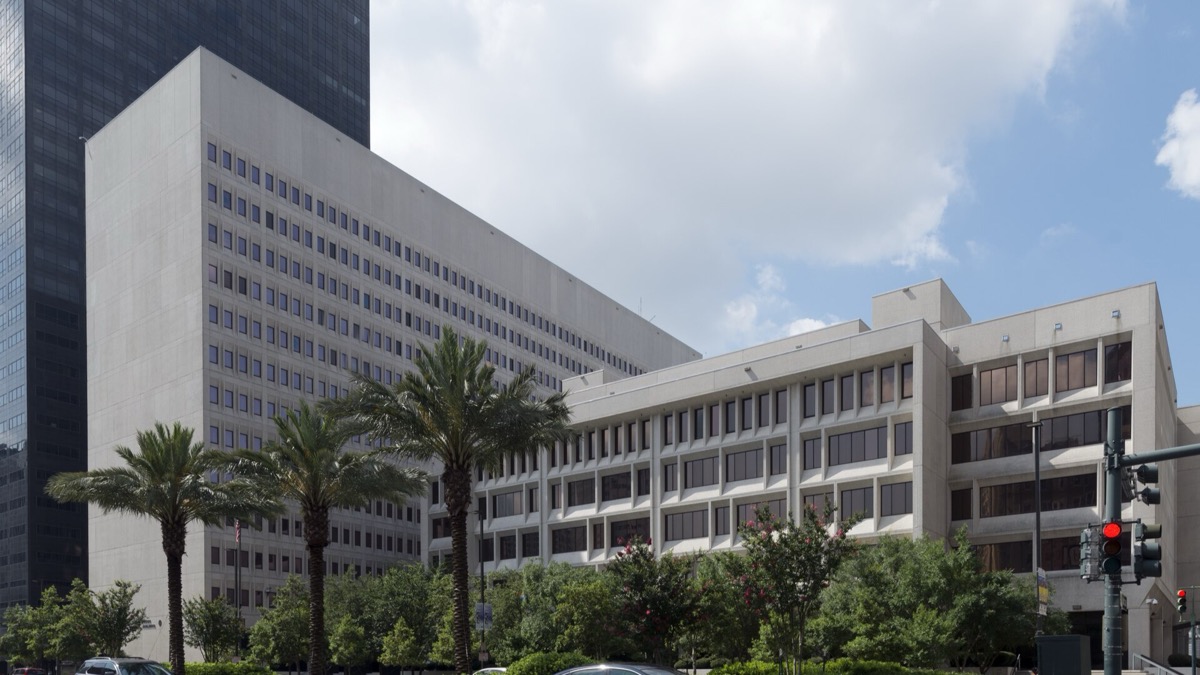
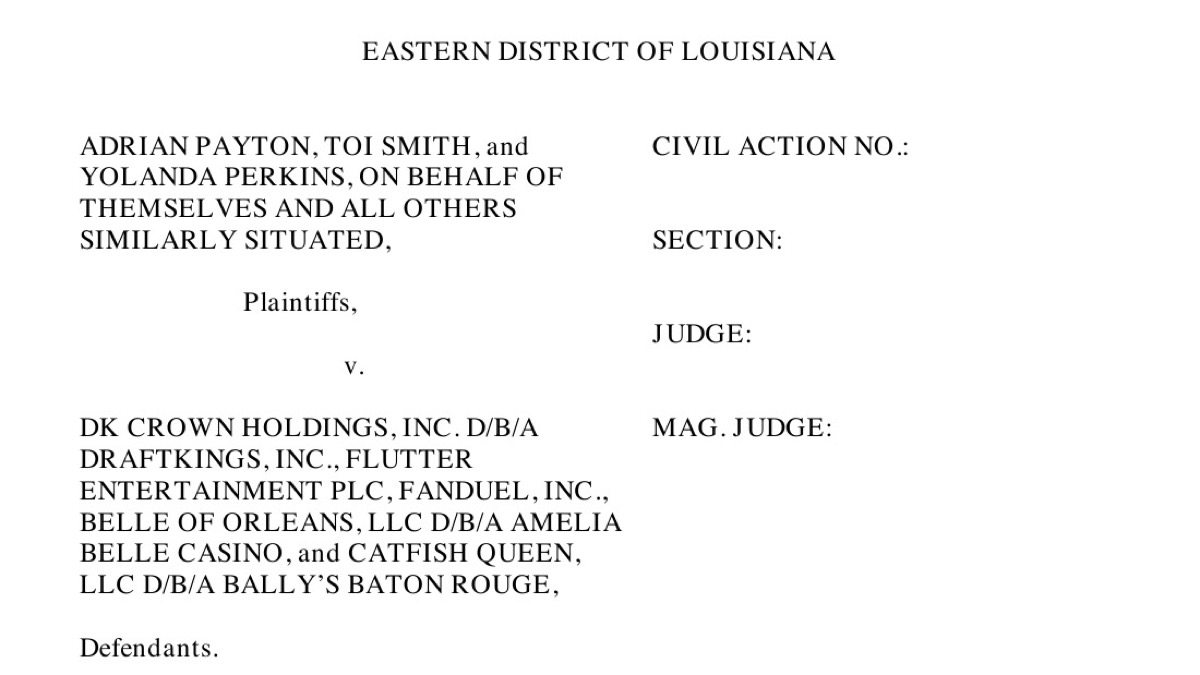
The two sportsbooks, FanDuel’s parent company Flutter Entertainment, and two Louisiana casinos that the bettors say hold the licenses the apps operate under filed the notice of removal on Nov. 24, 2026, in the U.S. District Court for the Eastern District of Louisiana. The case is now No. 2:26-cv-02704 and has been assigned to U.S. District Judge Eldon E. Fallon and Magistrate Judge Donna Phillips Currault, according to the federal docket.
GameEmpress read the full 18-page notice and the New York complaint the companies attached to it. GameEmpress has not reviewed the bettors’ October petition itself, so the dollar figures below come from the defendants’ notice, which quotes it.
What the three bettors say they lost
Adrian Payton, Toi Smith and Yolanda Perkins, all of Orleans Parish, filed the case on Oct. 22 in Civil District Court for the Parish of Orleans. They allege that the DraftKings and FanDuel apps use targeted promotions, tracking of user data and other features that encourage compulsive betting and cause financial and psychological harm.
Louisiana law generally bars plaintiffs from putting a dollar amount on their damages, so the petition has no total demand. To show the case is big enough for federal court, the companies pulled these figures from it:
| Plaintiff | Apps | Amount bet | Other figures in the petition |
|---|---|---|---|
| Adrian Payton | FanDuel | $88,716.27 | $25,728.10 in confirmed losses; says he took out a bank loan to pay gambling debts |
| Toi Smith | FanDuel, and also used DraftKings | $23,561.04 on FanDuel over two years | $22,018.50 deposited |
| Yolanda Perkins | FanDuel and DraftKings | About $32,000 on FanDuel and $37,000 on DraftKings | None listed in the notice |
The bettors want their net deposits back, meaning deposits minus withdrawals, along with the sportsbooks’ fees and “house hold.” They also ask for overdraft and cash-advance fees, interest on debts taken on to keep betting, the cost of psychiatric care and therapy, and damages for emotional distress and strain on their families.
Their claims rest on Louisiana law, including product liability and redhibition, a Louisiana civil-law claim that lets a buyer undo a sale, or get a lower price, when a product has a serious defect. They also bring contract, misrepresentation, statutory duty and unjust enrichment claims on behalf of a proposed statewide class and two subclasses.
Why two casinos are defendants
The suit also names Belle of Orleans LLC, which does business as Amelia Belle Casino, and Catfish Queen LLC, which does business as Bally’s Baton Rouge. According to the notice, the petition says these casinos hold the state licenses the apps operate under, failed to supervise the apps and shared in the revenue.
The notice traces each casino’s ownership out of state. It follows Amelia Belle through four holding companies to Boyd Gaming Corp. of Nevada, and Bally’s Baton Rouge through one to Rhode Island-based Bally’s Corp. If no defendant is a Louisiana citizen, the companies say, a federal court can hear the case.
The bettors tried to block this move in advance
The petition expected the companies to try for federal court. Under the Class Action Fairness Act, large class actions can usually be moved there, but a “local controversy” exception keeps some cases in state court. The bettors argued it applies here because most class members live in Louisiana, a Louisiana defendant is central to the claims, the injuries happened in Louisiana and no similar Louisiana class action had been filed in the past three years.
The companies’ answer turns on that last point. The law, they say, asks whether any similar class action was filed anywhere, not just in Louisiana. They then list five:
| Case | Court | Key dates | What the notice says it alleges |
|---|---|---|---|
| Farley v. Betfair Interactive US LLC | Federal court, Southern District of New York | Filed April 27, 2026; amended Nov. 4 | A proposed nationwide class says DraftKings, FanDuel and Flutter built apps to keep users betting through live and in-game wagers, removing friction between bets and deposits, and personalized promotions |
| Beyer v. DraftKings | Federal court, Northern District of Illinois | Filed in Illinois state court January 2025; moved to federal court February 2025 | DraftKings’ app was designed to encourage compulsive betting through data tracking and targeted promotions, with inadequate addiction warnings |
| Youngs v. DraftKings | Federal court, District of New Jersey | Second amended complaint Aug. 13, 2025 | Risks of mobile betting apps and promotional terms that were not properly disclosed |
| Macek v. DraftKings | Federal court, Eastern District of Pennsylvania | Amended complaint May 13, 2026 | DraftKings targeted vulnerable and losing users with promotions |
| Koester v. DraftKings | Federal court, Eastern District of Michigan | Amended complaint March 16, 2026 | DraftKings let users raise their own betting limits without required waiting periods |
The New York case matters most to the companies’ argument. It names DraftKings, FanDuel and Flutter, three of the companies sued in Louisiana, and the nationwide class it proposes would include the Louisiana bettors the New Orleans plaintiffs want to represent.
The companies also argue that the two casinos are only licensees and that the case is really about how DraftKings and FanDuel designed and marketed their apps. Neither sportsbook is a Louisiana citizen, so, the notice says, the law’s “home state” exception does not apply either. All five defendants agreed to the removal.
Arbitration could be the next fight
A footnote in the notice says that by moving the case, FanDuel and its associated defendants do not give up their right to ask the court to send it to arbitration under FanDuel’s terms and conditions. Flutter separately says it is not conceding that the federal court in Louisiana has jurisdiction over it.
The New York case shows how that could play out. Its docket on CourtListener lists entries for a motion to compel arbitration and a motion to dismiss, both filed Oct. 1. After the Farley plaintiffs amended their complaint on Nov. 4, another motion to dismiss was filed on Nov. 25, a day after the Louisiana removal.
What happens next
The companies say they will respond to the petition within the deadline set by federal court rules or ask for more time. Under Federal Rule of Civil Procedure 81(c), the response is due at the latest of 21 days after service or seven days after removal, which here would be Dec. 1. But the federal docket already shows a Nov. 25 entry titled “Extension of Time to Answer,” so that date may move.
The bettors can ask Judge Fallon to send the case back to state court. Under federal law, a motion to remand over a defect in how the case was removed must be filed within 30 days of the removal, which in this case is by Dec. 24. A challenge over whether the federal court has jurisdiction can come later. The notice says that under Fifth Circuit precedent, the bettors would have to prove that one of the exceptions applies.
The other entries so far are an order dated Nov. 24 and corporate disclosure statements filed Nov. 25. No court has ruled on any of the bettors’ claims, which are allegations and have not been proven.
Other betting customers are also trying to win back their losses through class actions. In Hawaii, a man who says he lost $129,000 on Kalshi sports contracts is seeking a class action for Hawaii users, and Kalshi moved that case to federal court too. GameEmpress follows these cases in its gaming law and lawsuit tracker.
If you or someone you know needs help with gambling, the National Problem Gambling Helpline is available by call, text or chat 24/7 at 1-800-MY-RESET.
How we reported this: GameEmpress read the defendants’ Nov. 24 notice of removal and the amended Farley complaint attached to it as Exhibit A, both from CourtListener’s RECAP archive. On Nov. 26, we checked the federal dockets of all five cases the notice cites. We did not review the Louisiana petition, which is not available for free, so every figure from it is as quoted in the defendants’ notice.