
Hawaii: Man Who Says He Lost $129,000 on Kalshi Sports Contracts Seeks Class Action for Hawaii Users

- A Hawaii man who says he lost $129,000 trading sports contracts on Kalshi over less than three weeks in September has filed a proposed class action on behalf of every Hawaii user who lost money the s…
- Brandon Farias filed the proposed class action on Oct.
- On Nov.
A Hawaii man who says he lost $129,000 trading sports contracts on Kalshi over less than three weeks in September has filed a proposed class action on behalf of every Hawaii user who lost money the same way. Kalshi has now moved the case from Hawaii state court to federal court.
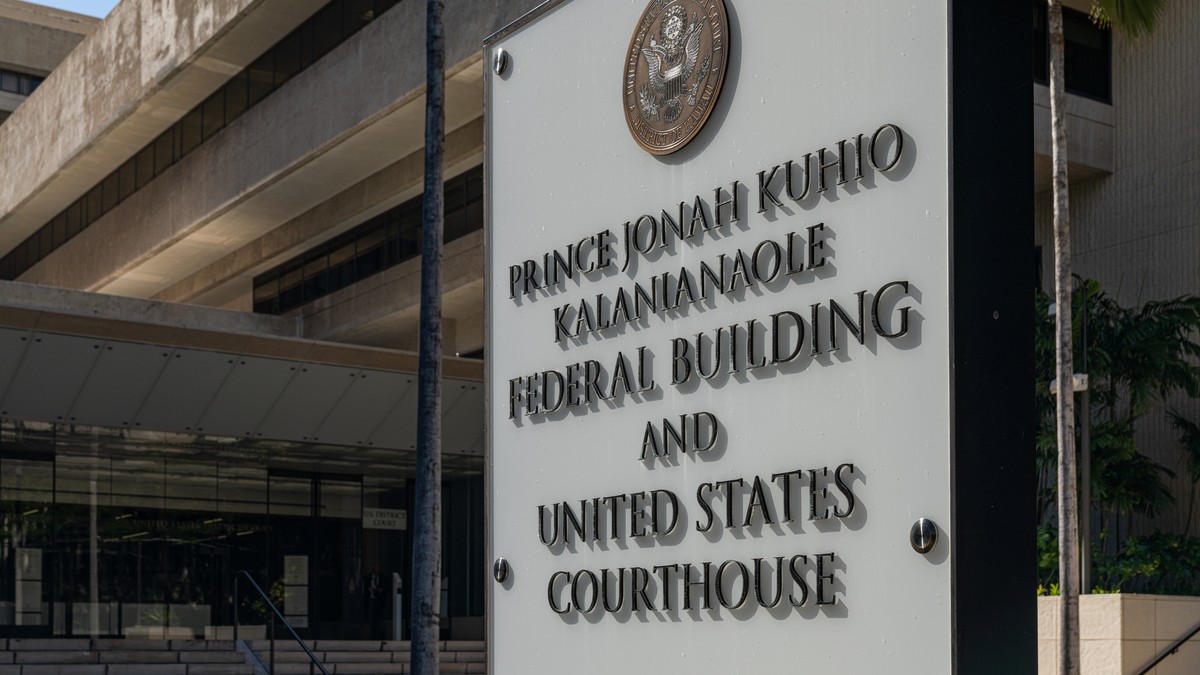
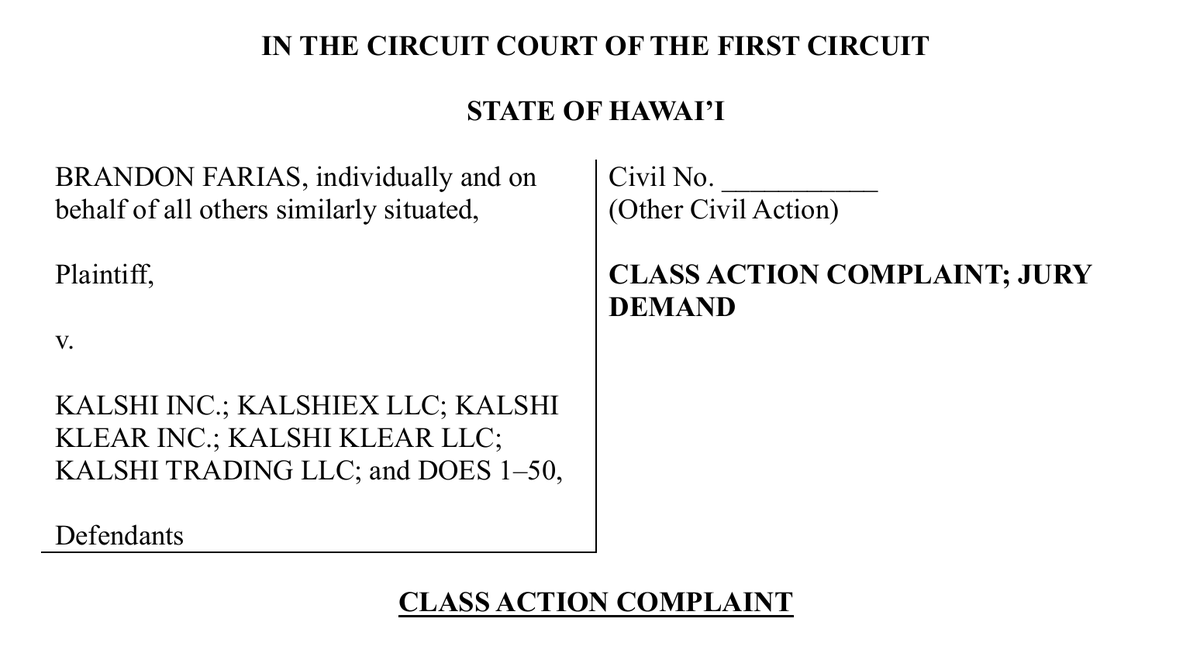
Brandon Farias filed the proposed class action on Oct. 1, 2026, in the Circuit Court of the First Circuit in Honolulu. Kalshi accepted service on Oct. 28.
On Nov. 17, Kalshi filed a notice moving the case to the U.S. District Court for the District of Hawaii, where it is now No. 1:26-cv-00591. GameEmpress reviewed the complaint and Kalshi’s notice, both available on the federal court docket through CourtListener.
The lawsuit names Kalshi Inc. and four related companies: KalshiEX LLC, Kalshi Klear Inc., Kalshi Klear LLC and Kalshi Trading LLC.
What the complaint says happened
According to the complaint, Farias found Kalshi through social media, TV ads and friends. He says the company advertised its sports product as “legal in all 50 states.” He took that to include Hawaii.
To open an account, Kalshi had him upload his driver’s license, the complaint says. From Sept. 10 through Sept. 28, 2026, he placed hundreds of sports wagers from Hawaii. The profit-and-loss records he supplied show thousands of transactions in that period.
The complaint uses the same figure, $129,000 or more, both for roughly how much he wagered and for the net losses he wants back. It says his records show “substantial realized losses” and limits his own claim to $129,000, before any extra damages Hawaii law allows.
He also says that when he reported a glitch, Kalshi’s support was “unresponsive and dismissive.”
The Hawaii law at the center of the case
The case turns on how Hawaii defines gambling. Under Section 712-1220 of the Hawaii Revised Statutes, a person gambles when they risk something of value on a contest of chance or a future event they don’t control, on the understanding that someone will receive something of value if a certain outcome happens.
The complaint says Hawaii does not allow commercial online sports betting of the kind Kalshi offered. But the same statute says gambling does not include “bona fide business transactions,” such as contracts to buy or sell securities or commodities at a future date. Kalshi quotes that exception in its notice.
Hawaii has read its definition broadly before. A state attorney general opinion, No. 16-1, listed beside the statute on the Legislature’s website, found that daily fantasy sports contests count as gambling under Hawaii law.
The lawsuit itself is brought under Hawaii’s consumer protection law. Filed by Honolulu attorney Brandee J.K. Faria, it says that selling sports betting as legal in all 50 states was an unfair or deceptive practice. It argues that the trades are therefore void and that Kalshi was unjustly enriched.
It asks for refunds of net losses, treble damages where the law allows them, and attorney’s fees.
Who could join the class
If a judge certifies it, the class would cover every Hawaii resident who bought sports event contracts on Kalshi and ended up with a net loss. The complaint says Kalshi’s own records, including identity checks and location data, can show who those customers are and how much they lost.
The complaint also points to an Aug. 28, 2026, ruling by the U.S. Court of Appeals for the Ninth Circuit, whose region includes Hawaii. In that Nevada case, the court upheld the lifting of a preliminary injunction Kalshi had won.
The court found that Kalshi had not shown federal commodities law was likely to override Nevada’s gaming rules as applied to its sports contracts. Kalshi brought that appeal itself. So, the complaint argues, the company knew about the ruling before Farias started trading.
Kalshi’s case for federal court
Kalshi’s notice does not respond to the claims, and the company says it keeps all its defenses. Those include the right to seek arbitration or a transfer. For now, it cites three grounds for federal court: the Class Action Fairness Act, ordinary diversity jurisdiction because none of the Kalshi companies is a citizen of Hawaii, and federal law.
To qualify for federal court under the Class Action Fairness Act, a class action must put more than $5 million at stake. With treble damages, Kalshi says, the class “need only contain 167 members averaging a $10,000 loss” to reach that mark.
On federal law, Kalshi says its contracts trade on an exchange regulated by the Commodity Futures Trading Commission. It describes the suit as an attempt to sue it under Hawaii law “for hosting federally regulated and lawful sports event contracts.”
The notice also says federal appeals courts are split on the issue. It adds that the United States and the CFTC have sued or joined suits against 12 states to stop them from enforcing gambling laws against such exchanges. Hawaii is not on that list.
The complaint says Kalshi Trading and other market makers may take positions opposite retail customers. Kalshi’s notice says Kalshi Trading makes up less than 3% of the exchange’s volume this year, and even less of its sports contract volume.
On Nov. 18, the court set a telephonic scheduling conference for 9 a.m. Hawaii time on Dec. 21 before U.S. Magistrate Judge Wes Reber Porter. CourtListener’s copy of the docket, last updated Nov. 18, showed no ruling on the claims as of Nov. 22, and none of them has been tested in court.
A growing fight over sports contracts
The Hawaii case adds a new kind of challenge to the state-by-state fights over prediction markets. New York has sued Polymarket US over alleged unlicensed gambling, and Polymarket agreed in a federal court deal with Michigan to stop offering new sports contracts there.
Those disputes pit the companies against state officials. This one comes from a customer, and it asks Kalshi to return what he and other Hawaii users lost.