
Michigan: Polymarket Agrees to Stop New Sports Contracts in Federal Court Deal With State

- Polymarket US has agreed to stop offering new sports-related event contracts to customers in Michigan and to close out any open positions by Nov.
- The Michigan Gaming Control Board announced the agreement on Oct.
- The deal was filed in the lawsuit Polymarket brought against Michigan officials in March 2026.
Polymarket US has agreed to stop offering new sports-related event contracts to customers in Michigan and to close out any open positions by Nov. 25, 2026, under a deal with the state that a federal judge approved on Oct. 27, 2026.
The Michigan Gaming Control Board announced the agreement on Oct. 28, 2026. QCX LLC, which does business as Polymarket US, will stop selling new sports contracts in the state and will close any Michigan positions that customers have not closed themselves by the end of the day Eastern time on Nov. 25, 2026. In exchange, the state agreed not to take enforcement action against the company as long as it complies, the board said.
The deal was filed in the lawsuit Polymarket brought against Michigan officials in March 2026. The federal court docket in that case, QCX, LLC v. Nessel (No. 1:26-cv-00710, Western District of Michigan), shows a proposed stipulation filed on Oct. 26, 2026, and a stipulation and order entered the next day. U.S. District Judge Paul L. Maloney is assigned to the case.
Maloney had already denied Polymarket’s request for a temporary restraining order in March 2026. In a 34-page opinion on June 17, 2026, he also denied its request for a preliminary injunction that would have blocked Michigan from enforcing its gaming laws against it. “At the heart of this case is the question of where the state interest in regulating gambling ends and the federal interest in regulating financial derivatives begins,” he wrote. He found that Michigan had the better argument for now, noting that Polymarket’s “vision of the scope of derivatives is so vast that it would encompass vast swaths of activity” traditionally left to the states. Polymarket’s appeal of that ruling is pending at the Sixth Circuit, according to the board.
The attorney general’s office warned Polymarket on Sept. 10, 2026, that it would take legal action if the company kept offering sports contracts in Michigan, the board said. The state had already reached similar agreements with Coinbase Financial Markets and Robinhood Derivatives and won a state-court preliminary injunction against KalshiEX.
“Polymarket joining Kalshi, Robinhood, and Coinbase in stepping back from these unlicensed sports contracts shows that Michigan’s approach is working,” said Henry Williams, the board’s executive director. Attorney General Dana Nessel said the state is “holding the national sports betting industry accountable to Michigan law.”
Michigan is not the only state where the company is in court. Federal court records on CourtListener show QCX LLC filed its own lawsuits in 2026 in federal courts in Massachusetts, Minnesota, New Mexico, New York, Ohio and Louisiana, the most recent on Oct. 27, 2026, in Louisiana. Cases brought against the company by Wisconsin, Kentucky, New York and the City of Baltimore are also in federal court, according to those records. CourtListener may not list every case.
Game Empress covered New York’s lawsuit against Polymarket US on Sept. 27, 2026, and a separate federal case in which an Army soldier is accused of winning about $400,000 on Polymarket using secret information.
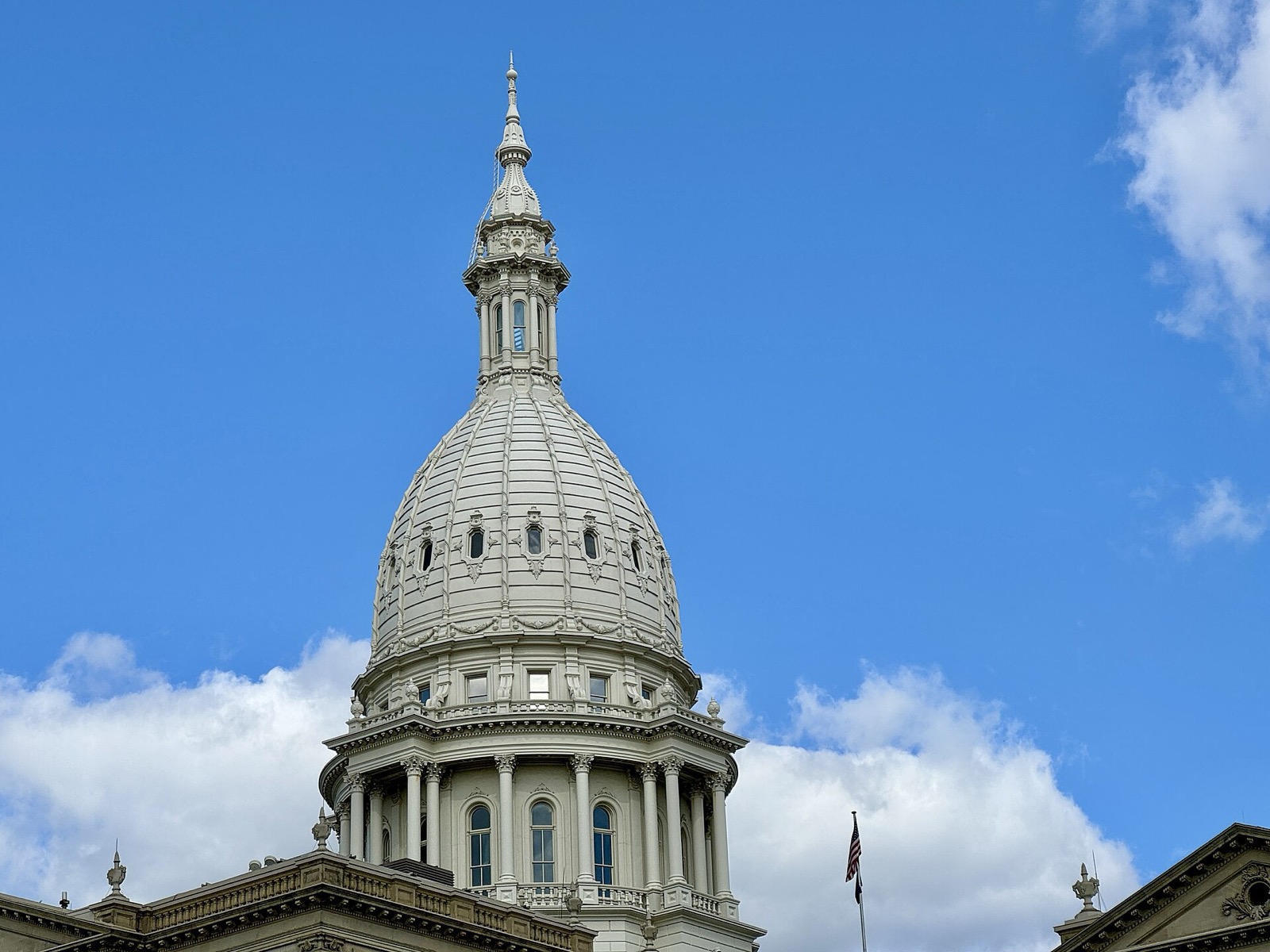
Featured image: The dome of the Michigan State Capitol in Lansing in 2024. Photo: w_lemay / Wikimedia Commons (CC BY-SA 2.0)
