
Game Industry Asks U.S. to Put Cronus Zen on Its Piracy Watchlist

- The video game industry’s main U.S.
- In an October 7 filing to the Office of the U.S.
- Most coverage so far, including TorrentFreak’s, has focused on voices38 and FitGirl.
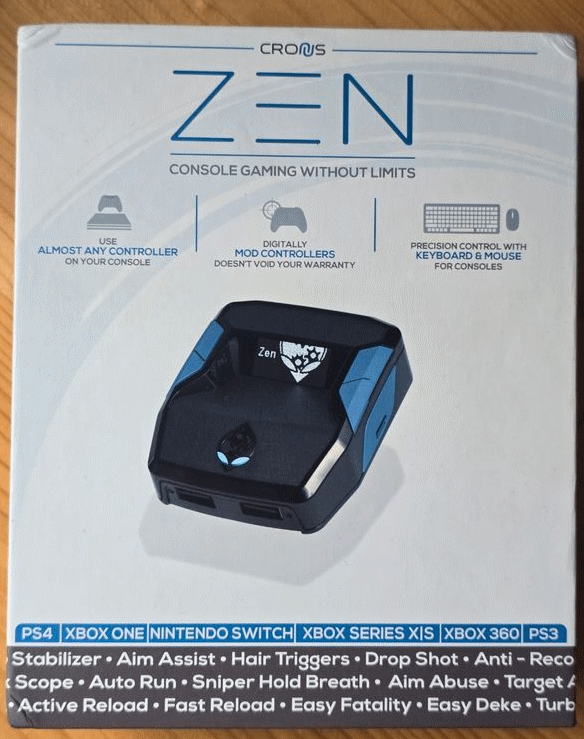
The video game industry’s main U.S. trade group wants Washington to treat Cronus Zen, the controller adapter many shooter players know well, as a piracy problem.
In an October 7 filing to the Office of the U.S. Trade Representative, the Entertainment Software Association asked for Cronus Zen and its online store to be added to the government’s annual Notorious Markets List, alongside two subscription cheat sellers, Artificial Aiming and System Cheats. The same 12-page letter goes after repack sites, account marketplaces such as G2A, and the Denuvo cracker known as voices38.
Most coverage so far, including TorrentFreak’s, has focused on voices38 and FitGirl. The cheat section is the bigger change. ESA is arguing that selling cheats is not just bad sportsmanship but a form of copyright piracy.
Why cheats, on a piracy list?
ESA’s case rests on the anti-circumvention part of copyright law. Games use technical protections to stop people from tampering with them. ESA says cheat tools are built to get around those protections, and that makes them piracy tools.
The letter is direct about it: “The basis for designation is not cheating or unfair play standing alone.” What matters, ESA says, is that the devices, scripts and services “avoid or defeat technological measures protecting copyrighted games.”
What ESA says about Cronus Zen
ESA says Cronus “does not merely sell a controller adapter.” It describes a whole ecosystem: the Zen device, Zen Studio software, game-specific “GamePacks,” a searchable script library, a Cronus Marketplace with free and paid scripts, a forum, a Discord server and customer support.
The filing quotes Cronus’s own numbers: more than 745,000 forum members and 120,000 Discord members, with one-click access to thousands of scripts. It lists the features players already associate with the device: automated recoil control, enhanced aim assistance, rapid fire, and automated firing and movement sequences. ESA also points to Cronus describing how the device presents itself to a console as an authorized controller.
The letter also takes on Cronus’s accessibility defense. ESA says it “strongly supports” legitimate accessibility hardware, but argues Cronus’s marketing is about winning, not about removing barriers for disabled players. Calling cheat tech accessibility tech, it says, “undermines the credibility of legitimate accessibility technologies.”
To show publishers have already pushed back, ESA cites reports on Cronus bans in Fortnite, the Battlefield 6 controversy, and Activision’s cease-and-desist over Call of Duty.
The two PC cheat sellers
The filing gives prices and member counts for the other two cheat markets:
| Artificial Aiming | System Cheats | |
|---|---|---|
| Top package | “Masterpackage” | “Premium Package” |
| Games covered | 79 (43 from ESA members) | 47 (26 from ESA members) |
| Price | About $20 a week or $150 a year | About €20 a month to €140 a year |
| Forum members | About 364,111 | About 230,497 (September 2026) |
ESA says that for one member’s game, Artificial Aiming’s cheat injected code into the game and exposed what players normally cannot see: opponents’ locations, health and weapons.
The System Cheats section includes a warning aimed at players. According to ESA, its loader tells users to switch off Windows protections that stop unauthorized administrator access and unsafe drivers. ESA says that can leave a PC open to kernel-level malware, system compromise and credential theft. In other words, players who install these cheats may be putting their own machines at risk.
One detail is inconsistent: the letter first says System Cheats affects 26 ESA-member titles, then later says “at least 28.”
ESA also lists unknowncheats.me, lavicheats.com and cosmocheats.com as other cheat markets, without detail.
Account shops and repack sites
ESA’s case against the account and item marketplaces rests mostly on how few listings they take down:
- FunPay removed 31% of more than 11,000 URLs ESA reported. It had about 29.6 million visits in August.
- Eldorado.gg removed 70% of more than 10,000, and took 30 days on average.
- G2A says it has more than 30 million customers and 40,000 sellers. ESA notes that G2A told USTR in 2021 it did not allow account and item sales, and says those sales now happen at scale.
On the piracy side, ESA says FitGirl removed none of the links it reported between August 2025 and August 2026. It puts FitGirl’s cost to publishers at about $1.08 billion between March and August 2026. That figure assumes each of the 15.5 million users it detected in file-sharing swarms for FitGirl repacks would otherwise have paid $69.99. ESA also nominated Anbernic, the handheld emulator maker, under this year’s USTR focus on “superfakes.”
What the list can and cannot do
Being on the Notorious Markets List is not a court ruling and does not shut anything down. USTR publishes it to name markets it believes engage in or facilitate piracy. ESA’s letter says the point is to push “governments, market operators, hosting and infrastructure providers, registrars, payment services” and others to act.
USTR has not said when the 2026 list will come out. The previous edition was published in March. Until then, ESA’s picks are only nominations. Named companies can push back: G2A filed a rebuttal to ESA’s nomination in 2021.
We’ve been following the legal fight against cheats. In September we covered Call of Duty’s Ricochet team reporting more than 375 cheat-reseller disruptions and Denuvo’s lawsuit against voices38. The full ESA letter is available here.
