
Gambling Trade Body VNLOK Takes Meta to Court Over Illegal Gambling Ads

- The trade body for licensed online gambling companies in the Netherlands has taken Meta to court, arguing that it is not doing enough to keep illegal gambling ads off Facebook and Instagram.
- VNLOK is an industry body, not a regulator, and its allegations are not findings by a court.
- At the heart of the case is a question of timing.
The trade body for licensed online gambling companies in the Netherlands has taken Meta to court, arguing that it is not doing enough to keep illegal gambling ads off Facebook and Instagram. The association, VNLOK, said on September 28 that it had served a summons before the Amsterdam court asking it to find that Meta is falling short of its obligations under the EU’s Digital Services Act, and to order it to do more to keep those ads away from Dutch consumers.
VNLOK is an industry body, not a regulator, and its allegations are not findings by a court. Dutch gambling is policed by the Kansspelautoriteit (KSA), which has acted against unlicensed operators itself, including a €24.8 million fine over the unlicensed sites Qbet.com and 55Bet.com that the company involved has challenged.
Taking ads down comes too late, VNLOK says
At the heart of the case is a question of timing. Illegal ads tend to appear and disappear quickly, so removing them after they go live often comes too late, VNLOK said in its announcement. It wants Meta to catch them earlier, before they are placed.
VNLOK chairman Björn Fuchs said the group had raised it with Meta first. “We have repeatedly pointed out the scale of the problem to Meta and asked it to work structurally on a solution. That has not produced enough results,” he said, in remarks translated from Dutch by Game Empress. “That is why we are now putting the case before the Dutch court.”
What the association’s research shows
VNLOK leans on its own research. It says more than 90% of the Facebook gambling ads it examined came from illegal gambling sites. That figure applies to VNLOK’s sample, not to every ad on the platform: its research published on August 27, covering May and June 2026, looked at the 65,000 gambling ads with the largest reach.
Of the illegal ads it identified, VNLOK says Meta removed 11% in May and 15% in June. In the association’s view, even those removals often came late, because the ads ran for an average of 1.58 days in May and two days in June.
A case that has been coming since June
VNLOK first said it would sue Meta on June 22, when it said it would seek a declaration that Meta had breached the DSA, an order to comply and a daily penalty for every day Meta failed to follow it. In a separate step, it notified the European Commission and asked it to investigate Meta and enforce the rules.
Meta responded at the time. It told Dutch broadcaster NOS in June that it could not stop every illegal gambling ad and was looking at ways to keep them off Facebook and Instagram, DutchNews reported.
Lawmakers are pushing too
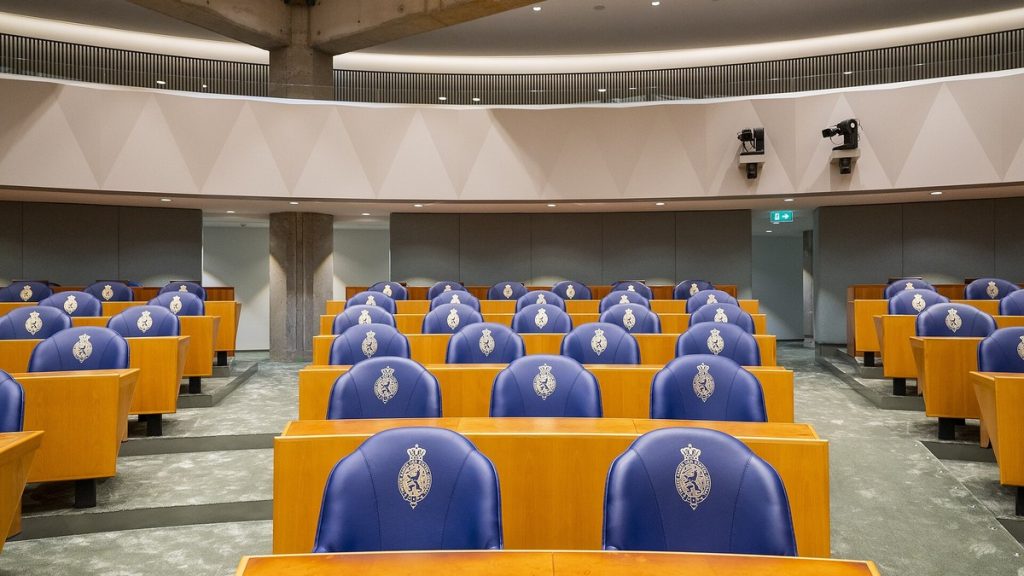
A day after VNLOK’s announcement, on September 29, MPs backed a motion from VVD member Bart Bikkers asking the government to change the gambling law so that a platform that keeps showing illegal gambling ads after removal requests would itself be in breach, and the KSA could fine it, Pokeren.nl reported. A motion is a request to the government, not a change in the law.
Similar questions are being asked in the US, where Florida’s attorney general recently demanded that Google, Meta and TikTok stop running sweepstakes casino ads.
VNLOK’s announcement did not say when the case will be heard.
Featured image: The Amsterdam District Court building. Photo: Ceescamel / Wikimedia Commons (CC BY-SA 4.0)
