
West Virginia: Animal Clinic Manager Admits Stealing $624,600, Says He Lost It All to Gambling

- For about two years, the man running a nonprofit animal clinic in West Virginia paid himself with its money.
- He says he lost every dollar of it gambling.
- Jerod Timothy Vannatter, 43, of Barboursville, pleaded guilty to money laundering in federal court on September 28, 2026, the U.S.
For about two years, the man running a nonprofit animal clinic in West Virginia paid himself with its money. By the time he stopped, $624,599.86 was gone.
He says he lost every dollar of it gambling.
Jerod Timothy Vannatter, 43, of Barboursville, pleaded guilty to money laundering in federal court on September 28, 2026, the U.S. Attorney’s Office for the Southern District of West Virginia said.
The clinic is Help for Animals, WSAZ reported. It is a nonprofit that describes itself as primarily a low-cost spay and neuter clinic.
Paychecks he did not earn, bills that were not real
Vannatter managed the clinic from about February 2018 to about February 2025. He handled its office work and its money, including payroll and payments to suppliers, according to prosecutors.
In his plea, he admitted that from about October 2022 to about December 2024, he wrote clinic checks to himself for pay and other payments he had not earned, prosecutors said.
He also made up supplier invoices. The clinic paid them, and the money went into his personal checking account.
By December 2024, his own salary was about $110,000 a year, Casino.org reported, citing his plea agreement.
Why the charge is money laundering
He admitted taking the full amount. So why is the charge money laundering, not theft?
It comes down to one transfer. On October 11, 2023, he moved $20,000 of the stolen money from his checking account into his savings account, the office said. That transfer is the basis of the single money laundering count, according to Casino.org. In his plea, he acknowledged knowing the money came from the clinic fraud.
“Addicted to online gambling”
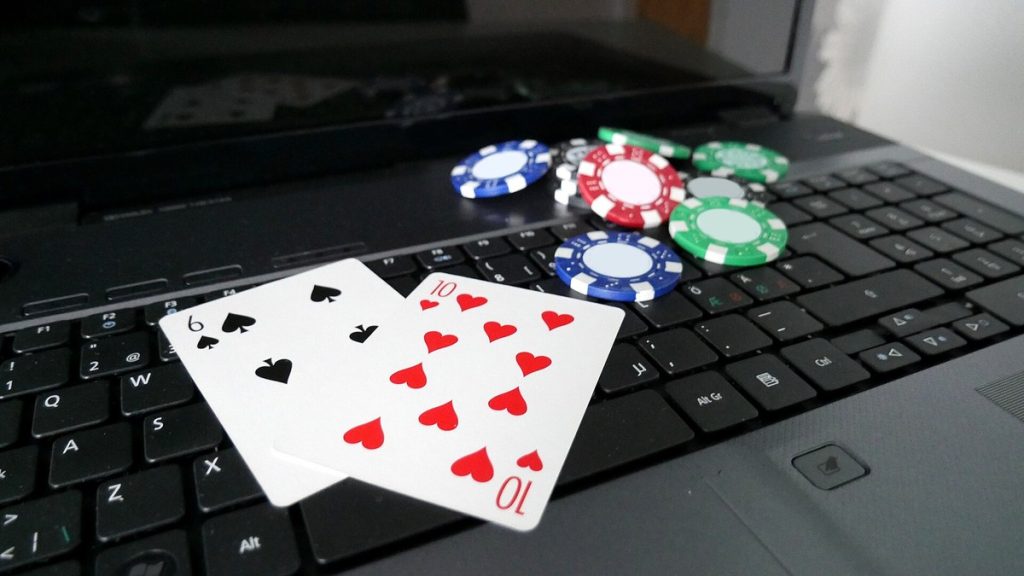
Vannatter explained his reasons in a signed court statement. “I initiated and continued my embezzlement scheme because I was addicted to online gambling,” he said, Casino.org reported.
He also admitted that all the money from the scheme was lost through gambling, prosecutors said.
That is his account. Court documents do not say which gambling sites he used, or whether they were licensed West Virginia operators or offshore sites, Casino.org noted.
Gambling losses sit at the center of other recent cases, too. In Boston, a lawsuit claims DraftKings’ AI promotions pushed losing bettors to gamble more. In Indiana, prosecutors say “Jimmy the Greek” Gerodemos sent a gambler a church video wishing his family dead.
“We trusted him”
At the clinic, the news hit hard.
“We were completely blindsided,” Vicki Graham, who now manages the clinic, told WSAZ. “We trusted him. He was part of our family.”
Graham said Vannatter left the clinic $200,000 in the red. Staff worked hard to keep it running so customers would not notice anything was wrong. She also told the station that he has shown no remorse and has never apologized.
Aurelia Ward, the clinic’s surgery director, told WSAZ she keeps thinking about what the money could have paid for: better support for employees, new equipment, and care for animals whose owners could not afford it.
The clinic has since added more safeguards against embezzlement. Staff say they will keep caring for the community’s animals, WSAZ reported.
What happens next
Vannatter is due to be sentenced on February 16, 2027. He faces up to 10 years in prison, up to three years of supervised release and a fine of up to $250,000, according to the office. Those are the maximums allowed by law; the judge will decide the actual sentence.
He also owes the full $624,599.86 in restitution, which is money a court orders a defendant to repay to the victim. Under his plea agreement, he agreed to help identify any assets that could be used to repay the clinic, Casino.org reported.
U.S. District Judge Robert C. Chambers presided over the plea hearing. IRS Criminal Investigation, the FBI and the Barboursville Police Department investigated the case, the office said.
If gambling is causing problems for you or someone you know, West Virginia’s 1-800-GAMBLER program offers crisis counseling and treatment resources.
Featured image: A dog wearing a recovery cone at a veterinary clinic in Newark, New Jersey. Illustrative image; not Help for Animals. Photo: Veterinarian Pet Alliance / Wikimedia Commons (CC BY 4.0)
