
Michigan Tribal Casino Payments to State Fall 71% From 2022 to 2025 Amid Gambling Disputes

- Michigan’s tribal casino revenue-sharing payments to state economic development funds fell from $52.8 million for the 2022 reporting period to $15.4 million for 2025, as several tribes withheld payme…
- The figures in the Michigan Gaming Control Board’s payment records represent a decline of approximately 71% between those reporting periods.
- Several tribes argue that expanded gambling has weakened the protections behind their payment agreements, Casino.org reported on September 29.
Michigan’s tribal casino revenue-sharing payments to state economic development funds fell from $52.8 million for the 2022 reporting period to $15.4 million for 2025, as several tribes withheld payments amid disputes over gambling exclusivity.
The figures in the Michigan Gaming Control Board’s payment records represent a decline of approximately 71% between those reporting periods. They measure payments to the Michigan Strategic Fund and Michigan Economic Development Corporation, rather than casino revenue or profits.
Several tribes argue that expanded gambling has weakened the protections behind their payment agreements, Casino.org reported on September 29. Its report also identified another tribe withholding payments, raising further concerns about the funding stream.
What the 71% decline means
Reported state payments dropped from approximately $52.79 million to $15.44 million—a decrease of about $37.35 million. The percentage decline was 70.76%, rounded to 71%.
That comparison covers 2022 to 2025. It does not mean payments fell by 71% in a single year, and it does not establish that customers spent less at tribal casinos.
The records also follow tribal payment periods, so the totals should not be treated as a uniform account of cash received within each calendar year.
Payment obligations differ between tribes. Some agreements list a 0% state payment rate, meaning a zero in the table does not, by itself, show that a tribe refused to pay.
Why the payments are disputed
The disagreement centers on protections against competing gambling.
Tribal-state gaming compacts and related court agreements set out the payment arrangements. Tribal casino disputes are playing out elsewhere too: a California judge declined to let a tribe reopen its Vallejo casino. Some link state revenue sharing to exclusivity or economic conditions, although the terms vary.
According to Casino.org, tribes contend that online lottery games, online casinos, sports betting and other gambling products have weakened those protections.
That is the tribes’ position in the disputes. It does not establish that Michigan breached every agreement or that a court has approved every decision to withhold payments.
When tribes began withholding payments
The MGCB’s 2025 Tribal Gaming Report records several withholding dates.
The Little River Band of Ottawa Indians began with the 2023 payment period. Gun Lake Tribe began on January 31, 2025.
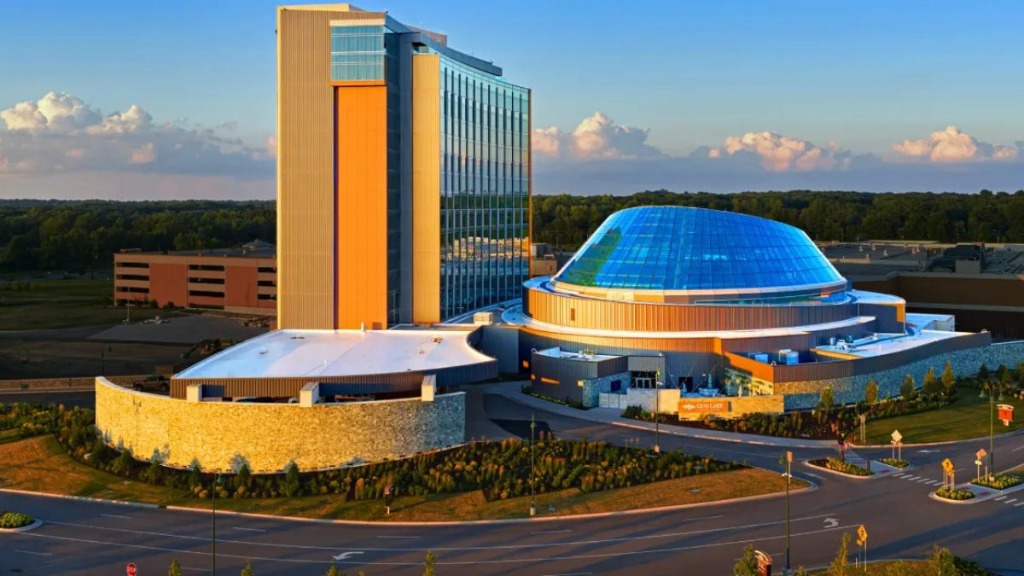
The Nottawaseppi Huron Band of the Potawatomi, which operates FireKeepers Casino Hotel, began withholding on February 2, 2026, for the 2025 reporting period. Its approximately $18.5 million contribution listed in the preceding annual report belongs to the 2024 reporting period.
Casino.org, citing Crain’s Detroit Business’s September 28 reporting, said the Pokagon Band had also begun withholding payments. Pokagon, which operates Four Winds casinos, contributed approximately $11.69 million for the 2025 reporting period.
The same coverage reported that Hannahville was the only tribe still making full state revenue-sharing payments at that time. Its reported 2025 contribution was approximately $644,303. The September reporting describes a more recent development than the annual payment table.
Local payments remain separate
The state payment disputes do not mean tribes have stopped all government contributions.
The 2025 report records approximately $30.6 million in separate payments to local governments and local revenue-sharing boards. Those payments are based on 2% of the relevant net win from Class III electronic games of chance.
The report generally excludes online casino and online sports-betting financial data, which fall under a separate state-law framework. These totals therefore do not capture every government payment connected to tribal gambling operations.
Pressure on economic development funding
Casino.org reports that shrinking tribal contributions are putting pressure on MEDC funding.
Pokagon’s reported decision to withhold payments could reduce later contributions further. However, the figures used for the 71% comparison do not establish a complete 2026 total or predict how the disputes will end.
Featured image: A casino blackjack table with cards and betting chips.
