
From Los Angeles Gamblers to El Cortez: The Las Vegas Mob Story Before the Flamingo

- Ask most people how the mob got to Las Vegas and you will hear one name.
- It is a good story.
- Siegel did shape casino history.
Ask most people how the mob got to Las Vegas and you will hear one name. Benjamin “Bugsy” Siegel rolls into the desert, opens the Flamingo in 1946 and turns a sleepy railroad town into a gangster’s playground.
It is a good story. It just is not the whole one.
Siegel did shape casino history. But by the time the Flamingo opened on December 26, 1946, organized crime figures were already running casinos in town, and Siegel himself had been doing business there for years.
It starts with a signature
That signature came on March 19, 1931, when Governor Fred Balzar signed a bill legalizing “wide open gambling” in Nevada, The Mob Museum notes.
Legal gambling and organized crime are different things, and a casino license in 1931 did not make anyone a gangster. What the law created was a legal market. In time, that market would draw people from illegal gambling elsewhere.
The Red Rooster question
Some tellings put mob money in Las Vegas almost from day one. Casino.org reports that Alice “Ma” Morris, who had just opened a nightclub called the Red Rooster, turned to Maurice “Goldie” Goldsworth, a Los Angeles gambling figure, for help getting into the business.
Goldsworth applied for a modest license covering one blackjack table and three slot machines, and the Red Rooster was licensed on April 1, 1931, the report says. It did not last. Federal agents raided the club over liquor sales that May, and its license renewal was turned down in July.
Was Goldsworth really part of the mob? Casino.org itself notes that mob historians disagree. That makes the Red Rooster an early, disputed chapter, not proof of when organized crime arrived.
Then came Los Angeles
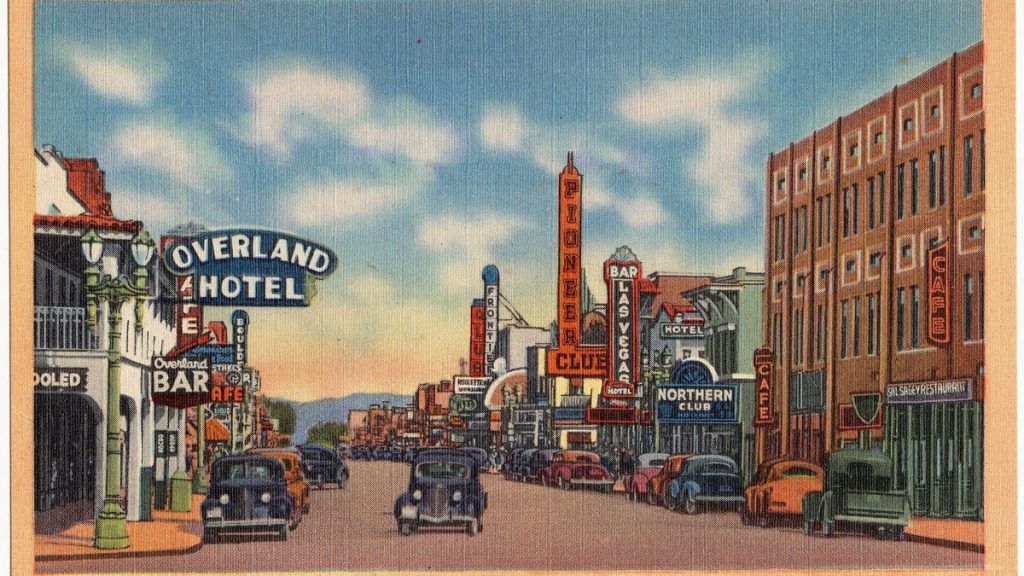
The firmer evidence begins in the late 1930s, and it begins in Los Angeles. In 1938, voters there recalled Mayor Frank Shaw and elected Fletcher Bowron, a reform mayor who set out to stop the city’s vice rackets, according to The Mob Museum.
That same year, PBS says, the first big wave of Los Angeles gambling operators reached Las Vegas. Among them was Guy McAfee, who bought the small Pair-O-Dice casino on Highway 91 in 1939, the museum writes.
The museum counts McAfee among the first wave of organized crime figures to move to Las Vegas from Southern California, along with Tutor Scherer, Farmer Page and Marion Hicks. They were getting away from crackdowns by California Attorney General Earl Warren and by Bowron in Los Angeles.
More followed. “Mobsters started moving to Las Vegas in the 1940s,” the museum says in its history of the era, drawn by wartime growth and the chance to run casinos without constantly looking over their shoulders.
Where Siegel fits in
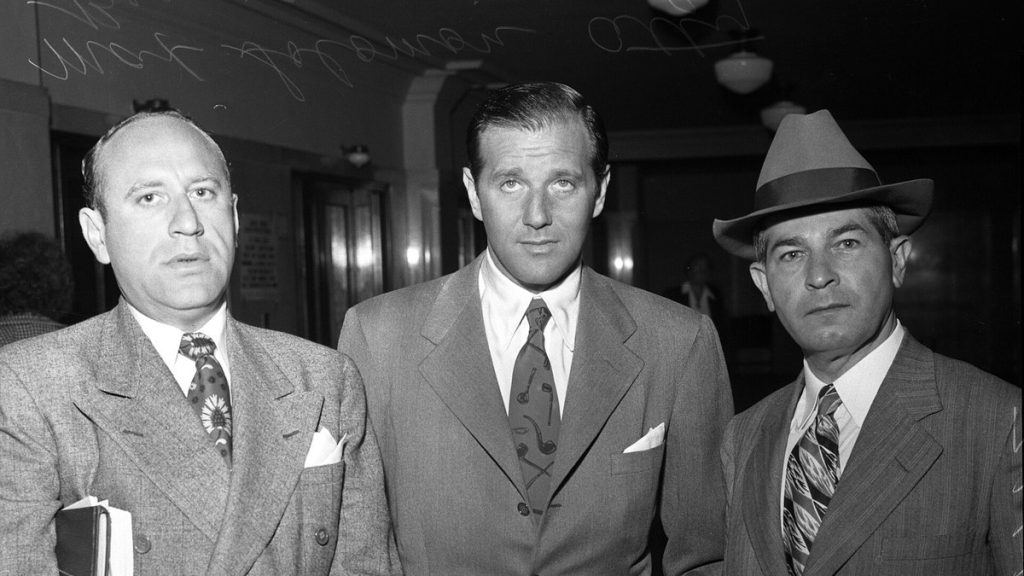
Siegel was part of that story, not the start of it. Sources place his early Las Vegas involvement in 1940 and 1941. Historian Eugene Moehring says in the PBS documentary Las Vegas: An Unconventional History that Siegel was sent to Las Vegas in 1941, while Casino.org puts his first investment there in 1940.
His early interest was the race wire, a service that relayed horse-racing results to off-track bookmakers. From there, PBS says, he put money into gambling halls on Fremont Street.
Bookmaking still lands people in court in Las Vegas today. Earlier this month, gambler William West Roberts was indicted on illegal bookmaking charges.
Then, in 1945, Siegel and Meyer Lansky “planted their flag in Las Vegas by purchasing El Cortez hotel-casino on Fremont Street,” according to The Mob Museum. On paper, PBS adds, the owner was a front man.
That was a full year before the Flamingo opened.
Whose Flamingo?
Even the Flamingo was not Siegel’s idea. The Mob Museum names Billy Wilkerson, a Los Angeles nightclub owner, as its first developer. Wilkerson later partnered with Lansky and Siegel to finance it, and Siegel eventually pushed him out and took control.
The resort opened on December 26, 1946, before its hotel rooms were even finished, the museum notes. Nor was it the first resort on the highway that became the Strip. Casino.org counts four casinos and two full resorts that got there first.
Why the myth sticks
None of this makes the Flamingo unimportant. Its success helped spark a casino building boom in the 1950s, and mobsters from around the country were involved in many of the new resorts, according to the museum. Today the Strip is Nevada’s biggest gambling market; it won $684.1 million from gamblers in August 2026 alone.
So Siegel earned his place in the story. He just did not write the first chapter. Nevada legalized gambling in 1931, and the mob was in town before the Flamingo’s doors opened.
Las Vegas before the Flamingo: a quick timeline
- March 19, 1931: Nevada legalizes “wide open gambling”
- April 1931: the Red Rooster gets a gaming license, Casino.org reports
- Late 1930s–early 1940s: gambling operators and organized crime figures arrive from Southern California; Siegel becomes involved before the Flamingo opens
- 1945: Siegel and Lansky purchase El Cortez
- December 26, 1946: the Flamingo opens before its hotel rooms are finished
Featured image: The El Cortez Hotel at Sixth Street and Fremont Street in Las Vegas, in December 2007. Photo: Mike Russell / Wikimedia Commons (CC BY-SA 3.0)
