
Washington, D.C.: Wrong Powerball Numbers on Lottery Website Matched His Ticket. Now He’s Suing for $100M+

- John Cheeks, whose Powerball ticket matched incorrect numbers displayed on the D.C.
- His latest amended complaint also seeks punitive damages and other relief.
- Cheeks, a former independent candidate for D.C.'s non-voting seat in the U.S.
John Cheeks, whose Powerball ticket matched incorrect numbers displayed on the D.C. Lottery website in January 2023, is seeking more than $100 million in compensatory damages over the handling of his denied prize claim, according to Casino.org.
His latest amended complaint also seeks punitive damages and other relief. Taoti Enterprises disputes his claims.
Website numbers did not match the drawing
Cheeks, a former independent candidate for D.C.’s non-voting seat in the U.S. House, bought his ticket on January 6, 2023. All six of his numbers then appeared as winners on the official D.C. Lottery website, where they stayed for three days, according to Casino.org. But they were not the numbers drawn in the actual January 7 Powerball drawing.
“I didn’t shout or scream,” Cheeks told NPR in 2024. He called a longtime friend, who advised him to photograph the numbers on the screen. His attempts to claim the prize were denied, NPR reported.
What the contractor says went wrong
Taoti Enterprises, a Washington digital agency hired to design and maintain the lottery’s website, said it had “accidentally” posted the wrong numbers as part of a quality assurance test, NPR reported. The numbers were not removed until three days later, according to court documents cited by NPR.
Court records describe a testing team checking a switch from Coordinated Universal Time to Eastern Standard Time. Randomly generated test numbers were uploaded to the live site instead of a private test site, Casino.org reported. The displayed numbers matched Cheeks’s ticket.
Taoti also pointed to a disclaimer on the lottery website saying the site is not “the final authority” for the drawing.
Lottery websites can do far more than post results. In Massachusetts, for example, a new online lottery brought in $139.4 million in sales in under five weeks.
From jackpot claim to constitutional case
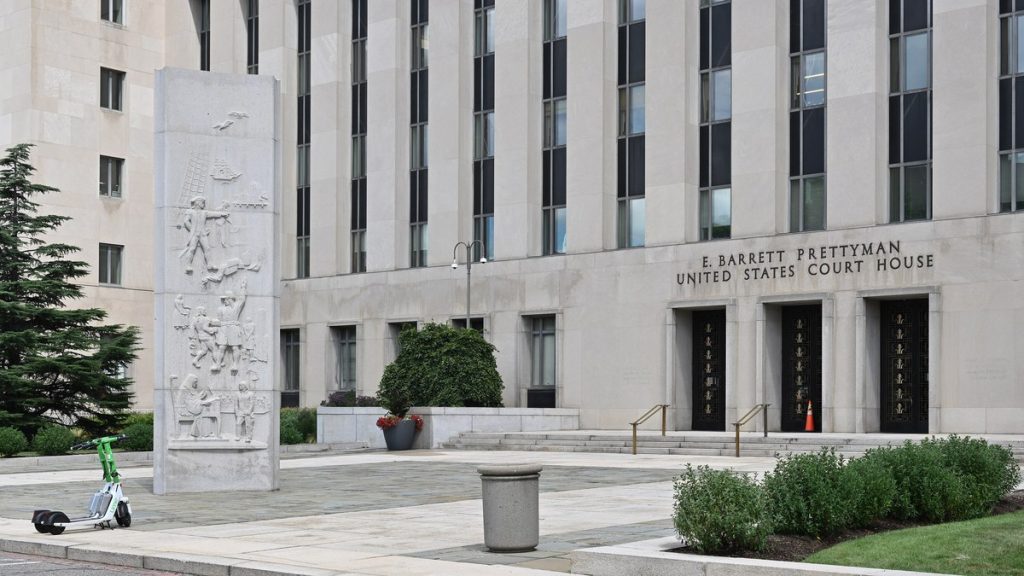
The latest case, Cheeks v. District of Columbia, was filed on December 31, 2025, in federal court in Washington, according to the court docket. Defendants include the District of Columbia, its Office of Lottery and Gaming, lottery contractor Intralot and Taoti.
An earlier lawsuit, which accused the defendants of fraud and unjust enrichment, was dismissed in December 2025 for lack of jurisdiction, Casino.org reported. That means the court found it did not have the authority to hear the case.
This time, Cheeks is not arguing over the numbers themselves. The latest suit alleges that the defendants violated his constitutional rights in how they handled his claim, including an alleged eight-month delay in reaching an administrative decision.
“This case concerns process, not outcome,” Cheeks states in the complaint, according to Casino.org. He also argues that private contractors, including Taoti, were effectively acting with the D.C. government.
The fight over records
Cheeks wants records he says could explain what happened. He has asked for Taoti’s contract with the lottery, website change logs, publication timestamps and communications about the numbers, arguing they could show who generated, approved, posted, corrected or removed them, Casino.org reported.
Taoti disputes those claims and is again seeking dismissal. It argues that the underlying dispute has already been decided in court, and said in a September filing that this is at least the fourth civil lawsuit Cheeks has brought over the January 2023 incident, Casino.org reported.
The company also argues that Cheeks cannot use discovery, the process of obtaining the other side’s records before trial, to find the facts he needs to build a viable claim. It wants the claims against it dismissed with prejudice, which would stop Cheeks from amending and pursuing them again in the same case.
Where the case stood in September
Casino.org’s article, published September 25, 2026, and updated September 28, reported that Judge Dabney L. Friedrich denied Cheeks’s discovery request on August 31. It also reported that Taoti’s motion to dismiss remained awaiting a decision.
Featured image: A Powerball and Mega Millions jackpot billboard in Missouri. Illustrative image; not connected to the case. Photo: Tony Webster / Wikimedia Commons (CC BY 2.0)
