
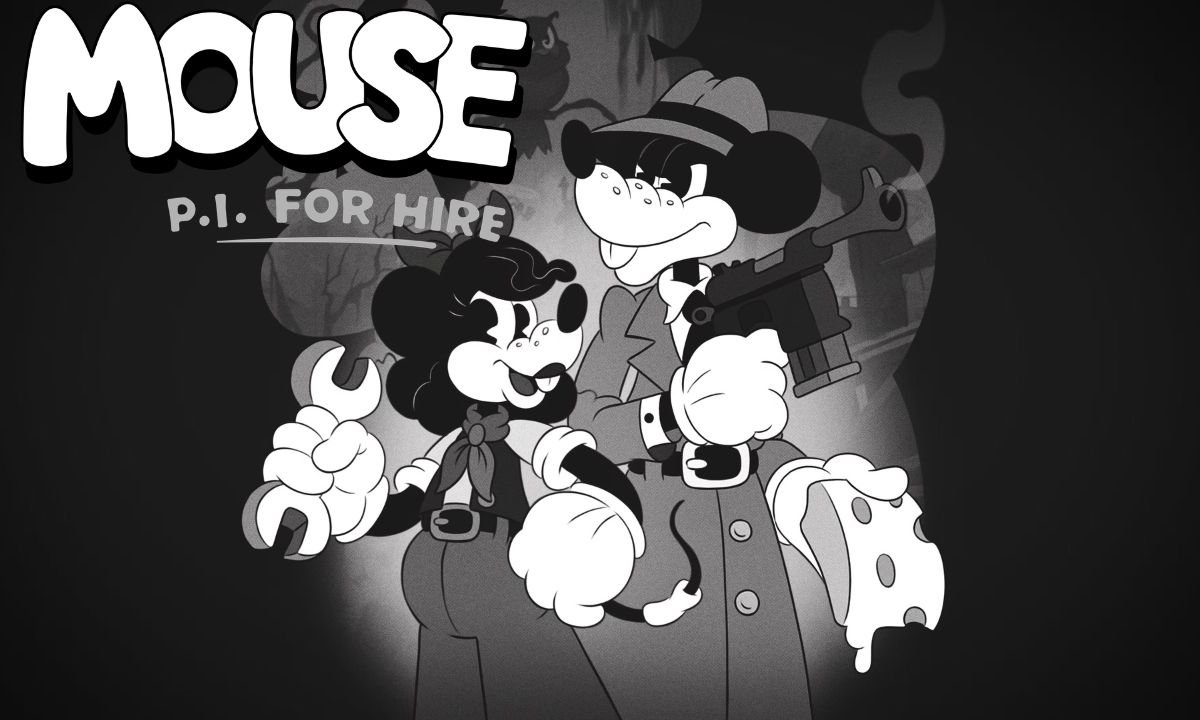
Fumi Games and PlaySide Studios are set to release Mouse: P.I. For Hire on April 16, 2026, across PlayStation 5, Xbox Series X/S, Nintendo Switch 2, and PC via Steam — with the $29.99 digital release drawing broadly favourable early reviews.
The game puts players in the role of Jack Pepper, a war veteran and former police officer turned private detective operating in the fictional, corrupt city of Mouseburg. Its visual approach sets it apart from virtually everything else on the market: every character, weapon, and enemy is drawn by hand, frame by frame, in the black-and-white rubber hose style of 1930s cartoons — layered over three-dimensional environments. At least one reviewer described the blend as unlike anything they had encountered in a current release.
Versions for PlayStation 4, Xbox One, and the original Nintendo Switch are also planned, though Fumi Games has stated that launch timing for those platforms will be detailed separately.
A Warsaw Studio’s Unlikely Critical Breakthrough
Fumi Games, an independent studio based in Warsaw, Poland, is a relatively small indie outfit, and the critical reception to Mouse: P.I. For Hire has been all the more striking for it. Advance reviews, published ahead of the April 16 unlock, have been broadly enthusiastic across major outlets.
One PC Gamer reviewer called it the best shooter they had played in ages, citing the rare achievement of a game whose visual style and underlying mechanics are equally strong. Critics at Kotaku and Final Weapon have offered similarly strong praise, with Final Weapon noting that many full-priced games offer considerably less content and polish than this release. On Metacritic, the game currently holds an aggregated score of 81 on PC and 75 on PS5 — a strong showing for a debut of this kind.
The praise is not entirely without reservation. A small number of reviewers noted that the campaign’s default difficulty leans slightly easy in its middle sections, and that some late-game sequences drag relative to the pace of the rest of the experience. A few critics also felt the detective mechanics — the investigative element implied by the game’s title — are lighter than they might have been. But these are minority notes in an otherwise favourable reception.
The Story: Three Cases, One Sprawling Conspiracy
The narrative begins with a routine job. Jack Pepper, voiced by Troy Baker, takes on a missing persons case involving a former war comrade and amateur magician named Steve Bandel. Within hours, that single case expands into three interconnecting investigations — a murdered woman whose friends want answers, a wave of kidnappings targeting Mouseburg’s shrew population, and a shadowy political movement with ambitions that reach far beyond anything Pepper initially suspects.
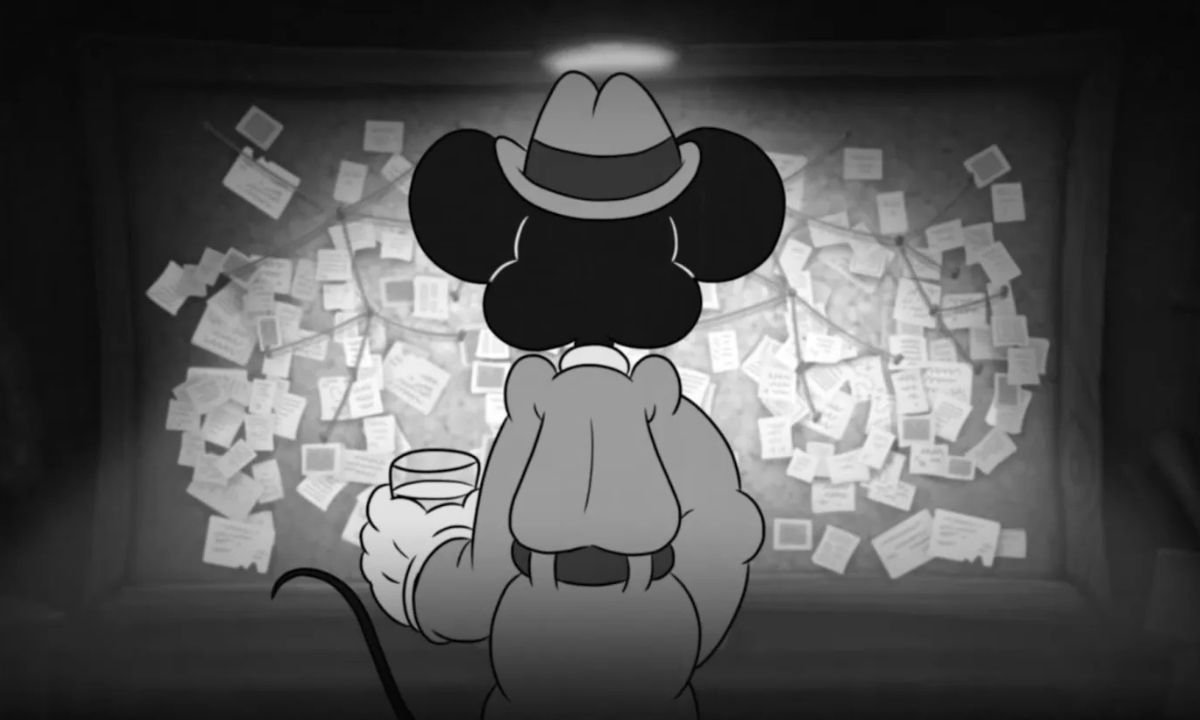
Players piece the story together by collecting physical clues scattered throughout each level, pinning them to a corkboard in Pepper’s office, and connecting threads between cases as the campaign progresses. The narrative touches on themes of institutional corruption, class discrimination, and political extremism — heavier territory than the game’s cartoon aesthetic might suggest — and Baker’s voice performance has been widely singled out as a particular strength, balancing the script’s dry humour with genuine dramatic weight.
The campaign spans more than 20 hand-crafted levels set across a variety of Mouseburg locations: city streets, a Hollywood-style film studio, an opera house, underground sewers, and poisonous swamps among them. Reviewers who completed the main story report a runtime of approximately 13 to 15 hours, extending to 18 or 20 hours for players who pursue the game’s substantial collection of side content.
Gameplay: Movement, Arsenal, and Boomer Shooter Roots

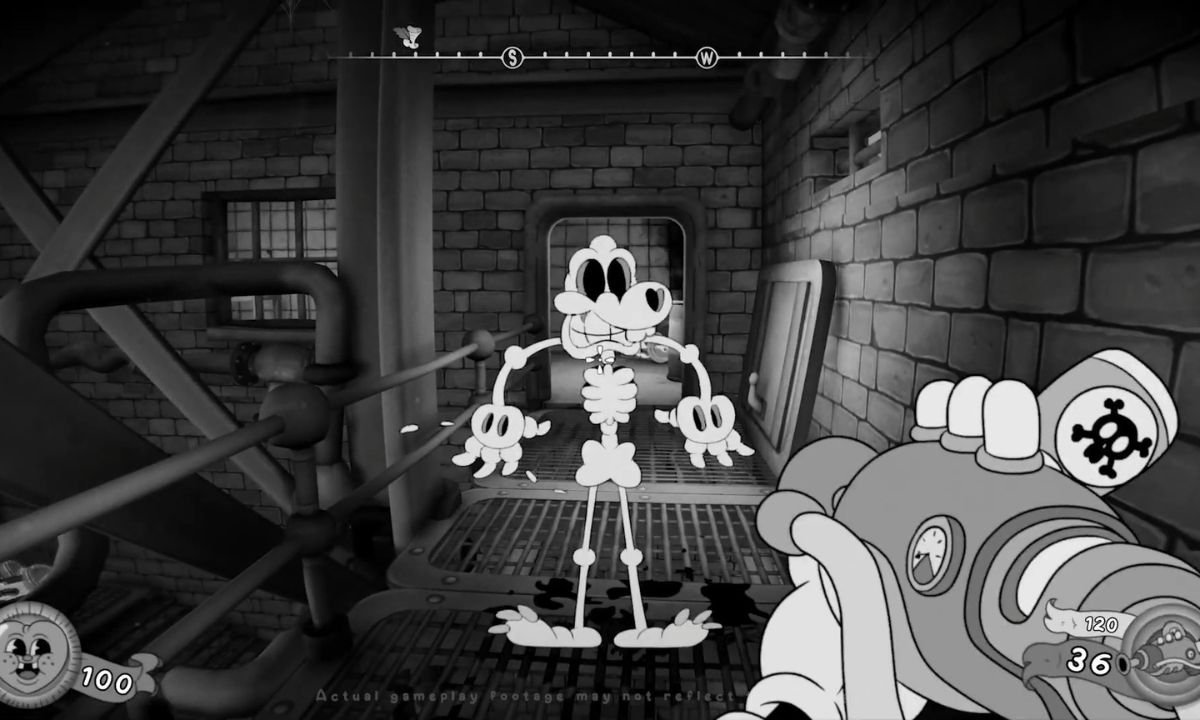
In terms of moment-to-moment play, Mouse: P.I. For Hire is a fast, movement-driven shooter with no cover system and no regenerating health. Critics have drawn comparisons to classic shooters including Doom, BioShock, and Quake, as well as to the broader boomer shooter tradition — games built on the principle that staying still is the surest way to die. Pepper begins each encounter with a dash ability and his fists, which the game refers to, accurately, as his mitts. As the campaign progresses, he unlocks a double jump, a wall run, a tail-powered hover descent, and a grappling hook, each of which integrates into both combat and the game’s platforming sections.
The arsenal grows accordingly. Players begin with a standard pistol and work their way toward a Tommy Gun, a shotgun, a shoulder-mounted cannon, and several weapons that depart entirely from historical precedent. The Devarnisher, for instance, strips the paint — and, effectively, the skin — from enemies on contact, triggering an animation in which their bones collapse into a cartoon pile. Environmental hazards, including hanging pianos, explosive barrels, and chemical drums, add a further dimension to combat encounters that reviewers described as consistently entertaining even after dozens of repetitions.
Between missions, players return to a central hub — Pepper’s office and surrounding neighbourhood — where a supporting character named Tammy converts collected blueprints into weapon upgrades, NPCs offer optional side assignments, and a baseball card mini-game provides something to do between shootouts. PC Gamer compared the hub structure to the style found in Dishonored, in that it functions as genuine downtime rather than a loading screen dressed up as a location.
A Visual Style Years in the Making
Mouse: P.I. For Hire was first shown publicly in 2023, at which point it was known simply as “Mouse.” Fumi Games built the project around the rubber hose animation style popularised by early cartoon studios in the 1920s and 1930s — a visual tradition that has seen renewed creative interest in recent years. The studio spent years developing a pipeline capable of combining hand-drawn 2D animation with a 3D Unity engine environment, producing a result in which every on-screen character faces the player directly regardless of movement direction, in the manner of the original cartoons.
The sound design follows the same period logic. An original big band jazz score, performed by a live orchestral ensemble, accompanies every level, and sound effects throughout the game are styled after the analogue audio of early animation. Several reviewers described the combined audiovisual experience as the most committed execution of a single creative concept they had encountered in a recent release.
Release Details
Mouse: P.I. For Hire launches globally on April 16, 2026, on PlayStation 5, Xbox Series X/S, Nintendo Switch 2, and PC via Steam. The digital standard edition is priced at $29.99 on PC, PS5, Xbox Series X/S, and Switch 2. Physical editions carry higher price points, including $39.99 for the physical Switch 2 standard edition, with Mouseburg Edition variants priced at $49.99 and $59.99 respectively.
Fumi Games has referenced post-launch DLC for the title, though no release window or content details for that additional material have been announced at the time of writing.
Keep reading: Latest gaming news
Mouse: P.I. For Hire was developed by Fumi Games and published by PlaySide Studios. It launches April 16, 2026, on PlayStation 5, Xbox Series X/S, Nintendo Switch 2, and PC via Steam. Releases on PlayStation 4, Xbox One, and Nintendo Switch will be confirmed separately.